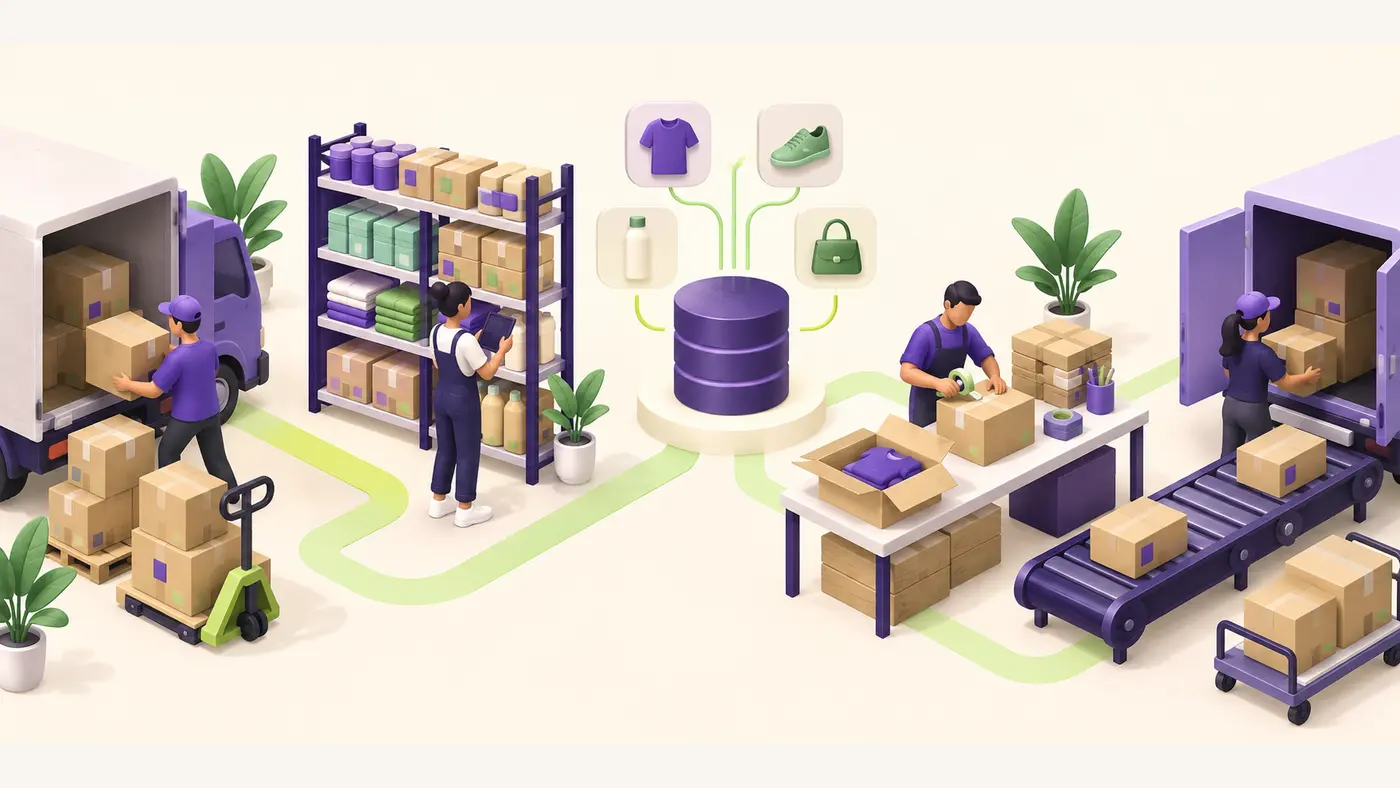
Customers may discover a business through local search, ask a question in a message, visit a physical shop and later order online. The experience feels connected to the customer even when the business uses several operating tools.
Kataboom supports connected selling by giving each channel a clear role and connecting the signals needed for dependable operations. Connection does not mean every channel can change every record. Inventory, orders, customers and consent still need responsible owners.
Key takeaways
- Treat each channel as a customer doorway, not a separate business.
- Use POS & Inventory as the operational stock source.
- Move confirmed orders into an accountable commerce workflow.
- Keep customer service communication separate from marketing permission.
Define the role of every selling channel
A physical POS completes counter sales. Storefront owns the online buying journey. WhatsApp and Instagram support conversations and reviewed social commerce. Yellow Pages supports local discovery and trust.
Write the purpose and boundary of each channel. This prevents staff from using a conversation as the only order record or allowing a listing to become an uncontrolled customer database.
Practical actions
- Name the customer action each channel supports.
- Define when demand becomes a confirmed order.
- Assign the team responsible for response and fulfilment.
- Choose the operational system of record.
Use one catalogue and inventory foundation
Different channels may present products differently, but core identity, price rules and stock availability should come from an approved operational source.
POS & Inventory owns the catalogue and stock ledger. Storefront can use those records when configured. Social teams should confirm availability from the same source before promising an item.
Practical actions
- Standardise product names and variants.
- Choose which items are visible by channel.
- Define price and promotion ownership.
- Show uncertain availability honestly.
Turn conversations into controlled orders
A social message often begins with incomplete information. The team may still need to confirm the product, quantity, customer details, payment method and fulfilment choice.
Use a reviewed handoff. Keep the conversation useful, then create the operational record in the product responsible for the order. Avoid marking payment or delivery complete without provider or fulfilment evidence.
Practical actions
- Capture the agreed order details.
- Confirm identity only to the level required.
- Record payment outcome distinctly.
- Give fulfilment a named owner and state.
Keep useful customer context without assuming consent
A customer who asks about an order expects a service response. That does not automatically make the person eligible for promotional messages.
Record operational contact and marketing consent separately. If the customer chooses future communication, preserve the purpose, channel and evidence. Apply withdrawal and suppression before later campaigns.
Practical actions
- Explain why contact information is requested.
- Use only the information required for service.
- Request marketing permission separately.
- Respect channel preferences and withdrawal.
Design one accountable fulfilment path
Every confirmed order needs a path through preparation, collection or delivery and completion. The team should see which stage the order has reached and who owns the next action.
Test the complete path for each enabled channel. Review cancelled orders, failed payments, unavailable stock and delivery exceptions before increasing traffic.
Practical actions
- Use clear order states.
- Connect inventory reservation and release.
- Set realistic delivery or collection promises.
- Provide a useful receipt or confirmation.
Measure channel value beyond order count
A channel can create many enquiries but few profitable orders. Another may generate repeat customers with lower service effort.
Review conversion, fulfilment success, gross margin, response time, returns and customer retention together. Use the evidence to improve the channel workflow, not simply to spend more on reach.
Practical actions
- Enquiry to confirmed order conversion.
- Payment and fulfilment completion.
- Order margin and return rate.
- Repeat purchase and service quality.
Frequently asked questions
Clear answers for the next step.
Can Kataboom connect WhatsApp and Instagram?+
Kataboom supports reviewed social commerce connections. Provider approval, account ownership, permissions and the exact workflow must be confirmed during activation.
Which product owns online inventory?+
POS & Inventory owns the authoritative stock ledger. Storefront uses that source for online availability and reservations when the connection is configured.
Does a social enquiry count as marketing consent?+
No. A service or sales conversation has an operational purpose. Marketing permission should be captured separately for the relevant purpose and channel.
Put the guidance into practice
Create a dependable online buying journey.
Explore Storefront for catalogue discovery, checkout, payments, orders and inventory aware fulfilment.